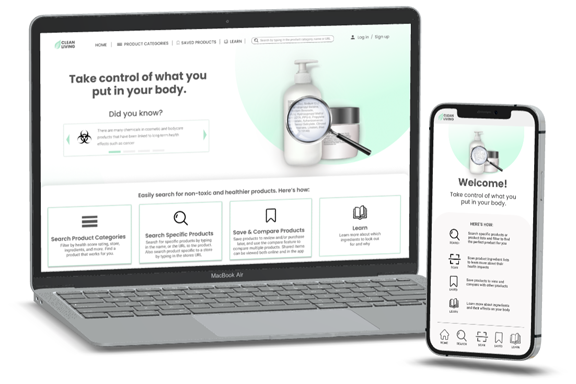
PROBLEM SPACE:
People around the world use and desire cosmetics; however, a lot of these cosmetic products have ingredients that have not been tested or regulated for safety, many that have been linked to endocrine disruption, cancer, pregnancy loss, hyperactivity, male infertility, attention problems, and more. Tools have been developed to help educate consumers and help them make healthier choices when buying cosmetic and body care products, but many users still do not check product ingredients before purchasing personal care products.
CHALLENGE:
How might we create a tool that makes it easier for shoppers to find healthier products with less harmful chemicals in stores and websites where they may shop, influencing healthier lifestyle choices.
SOLUTION:
A human-centered app and website design that implements machine-learning and ai technology to simplify the search for healthier products.
ROLE:
This was an individual project: UX Researcher, UX Designer, Visual Designer and Content Strategist
A literature review, followed by primary research, was conducted to learn more about the problem space. The goal was to better understand why people research (or do not research) product ingredients before purchasing cosmetic or personal care items.
SURVEY FOUND AWARENESS DID NOT CHANGE BEHAVIOR:
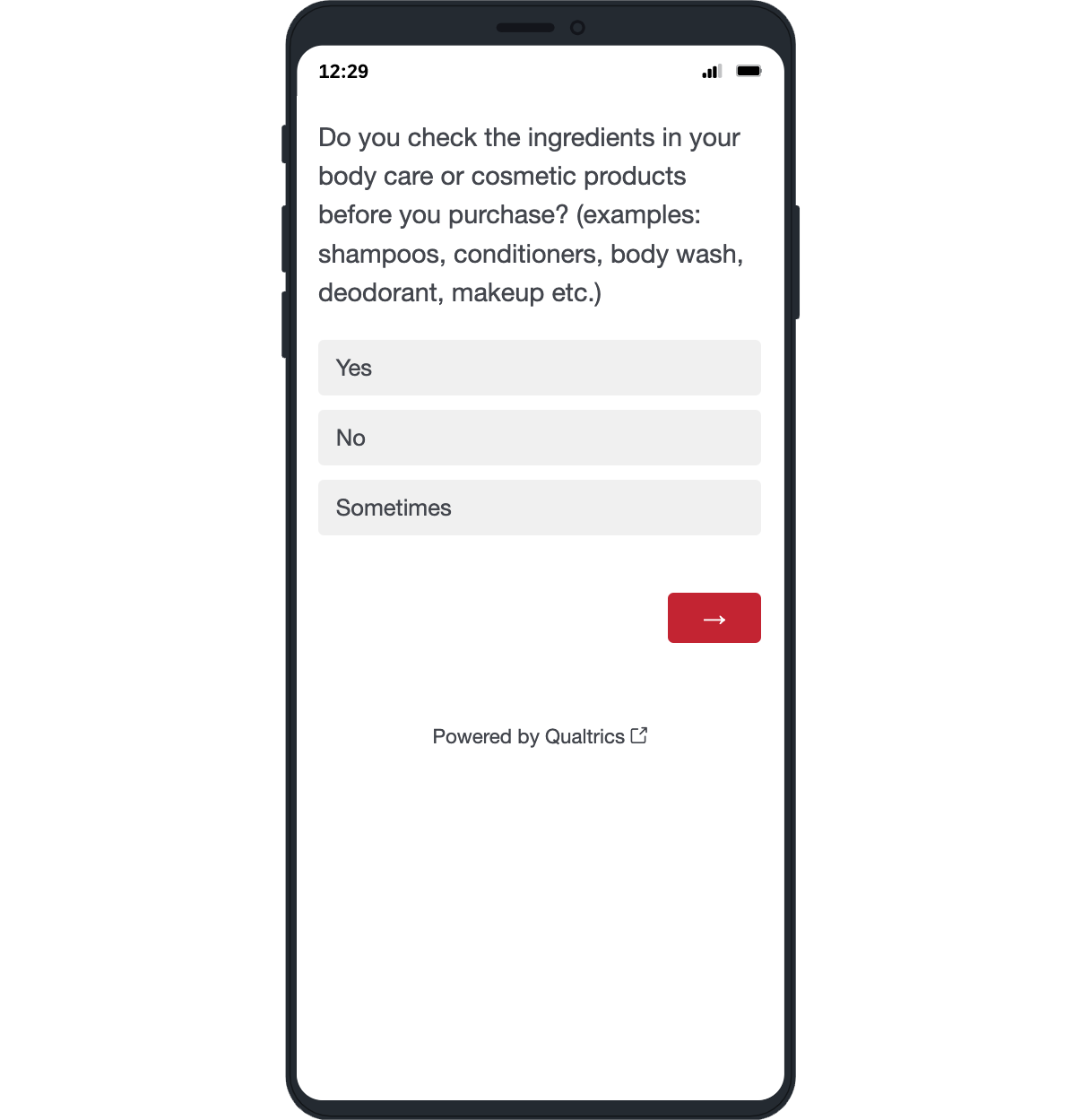
Literature in this problem space focused on studies outside of the U.S., so I conducted primary research. A survey was sent to 90 18-30 year old US residents, primarily located in the Midwest. The survey results aligned with the literature. Even though people were aware of harmful chemicals in cosmetic products, they still did not always check their products.
Key Findings:
• 81% were aware of harmful chemicals in cosmetics
• 10% claimed they check the ingredients in their products
• 48% claimed they sometimes check the ingredients in their products
• 84% listed they do not use any resources to help understand the ingredients in products.
Many factors beyond my survey can influence behavior, but notable factors from the survey include:
• Users prioritize other factors when making purchasing decisions such as price, reviews, and convenience location, rather than natural or organic elements.
• Users lack the knowledge on product ingredients.
• Users find the search for healthier products difficult.
• Lack of time, convenience, or care.
USERS FOUND EXISTING TOOLS OVERWHELMING & INCONVENIENT:
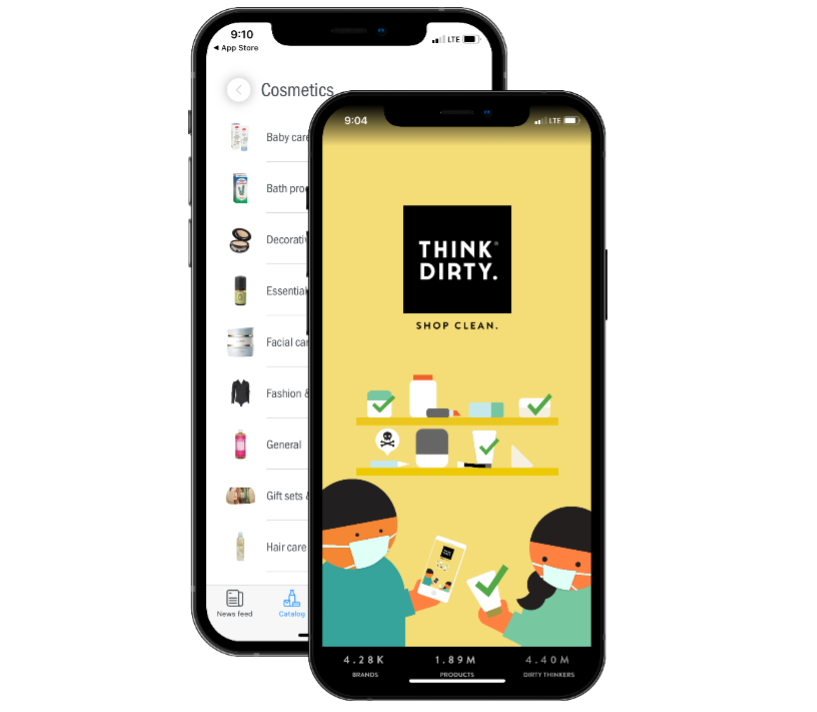
To understand why people were not utilizing the resources, I explored many existing tools meant to help ease some of these challenges. I evaluated existing products through a qualitative usability test with 20 adults aged 18-30. I tested 2 apps: Think Dirty and CodeCheck, and 2 websites: SkinCarisma and CosDNA.
Participants liked overall health ratings, color-coding and the ability to scan to pull up product-specific health information; however, they also thought the tools were:
• Overwhelming
• Not beginner-friendly
• Inconvenient
• Unclear
• Time consuming
Some users were surprised to learn about the ingredients in some product, which peaked curiosity to know more about what is in their products. This implied the tools were on the right track for influencing health decisions; however, when asked to rank how likely they would be to use the product, users ranked the apps low.
LOW-FIDELITY PROTOTYPES WITH MACHINE LEARNING & FILTERS:
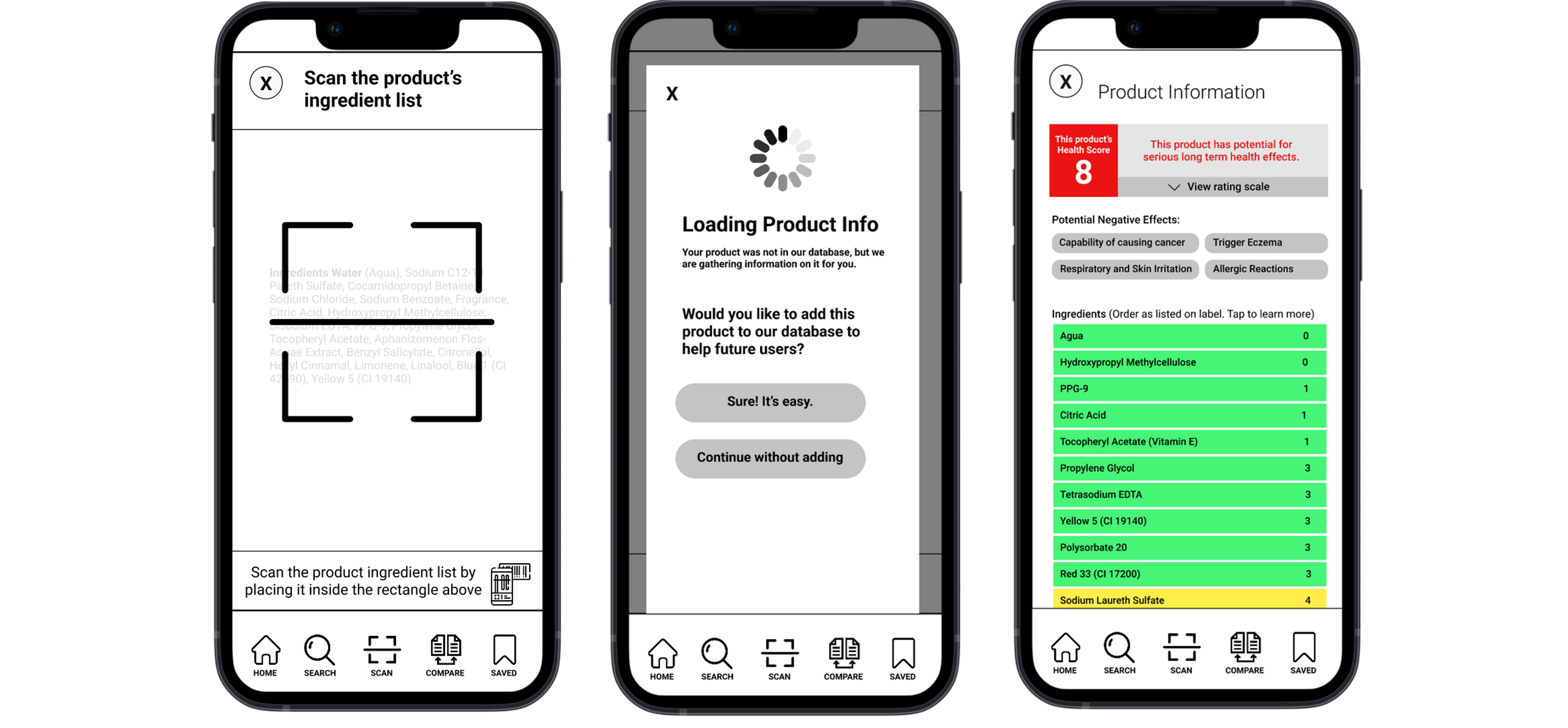
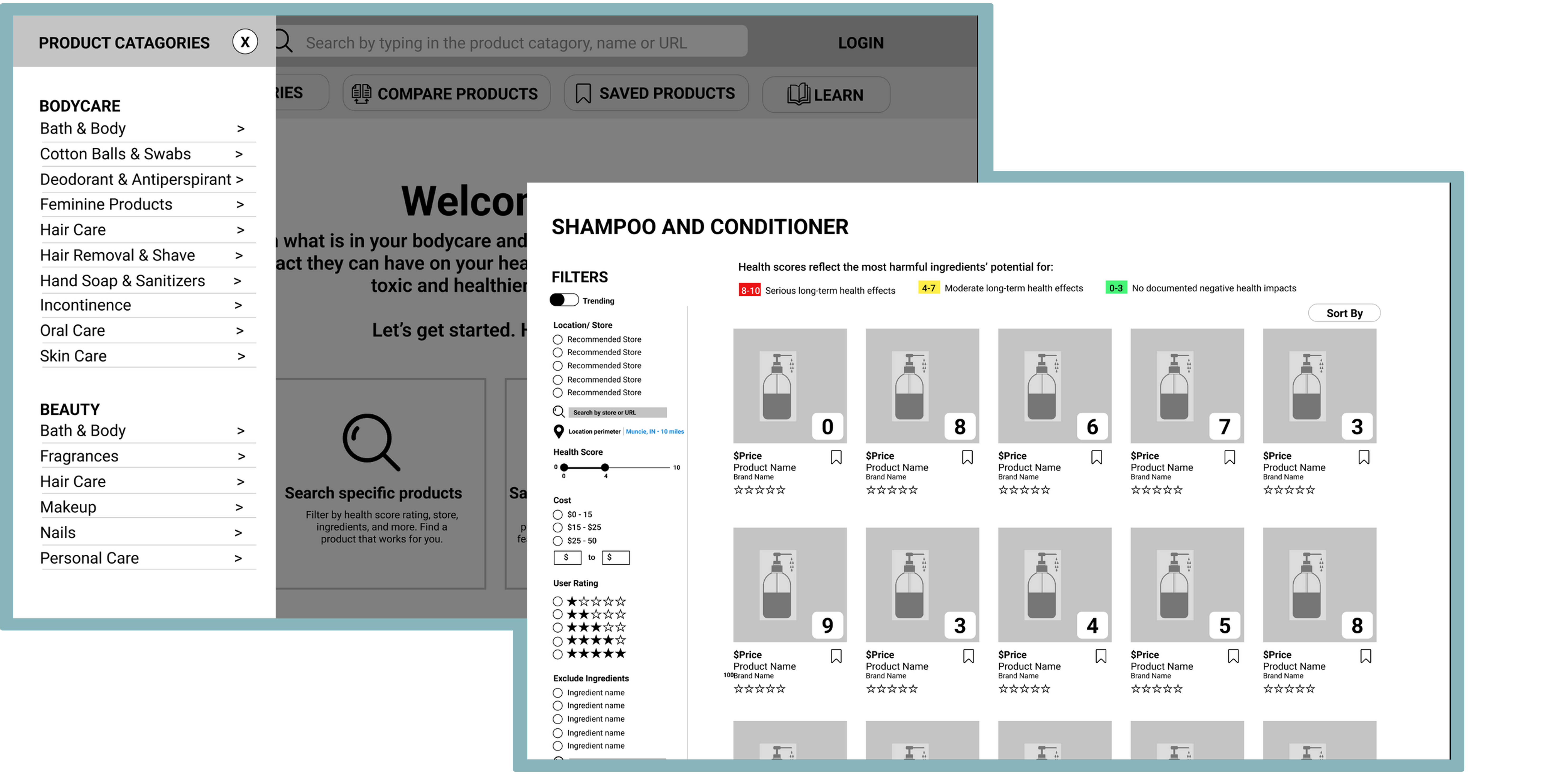
After conducting primary research, I begin designing, focusing on easing the most prominent pain points: convenience, time and overwhelm. I started by creating a low-fidelity prototype of both an app and a website. The two major additions included: machine learning to allow products that were not already in the database to be added automatically, and filtering options to quickly allow people to narrow and personalize their search.
TESTING REVEALED EASE OF USE & LIKELINESS OF USE:
The prototype was tested with 10 users, where users ranked the prototypes higher for ease of use and likeliness to use. The testing also revealed some additional kinks with the prototype, which was revised in the final version.
I took the feedback from the concept to build and design an interactive mid-fidelity prototype to test with users.
Key differences in the design when compared to existing tools were:
• Machine learning
• Advanced filtering options that included store preferences
• “Learn” section
The tools were then tested with 10 ball state students, 5 for each (4 females and 1 male) using a guided usability test.
“Oh! Look at that! I need a website like this. It tracked down the local shop and pulled the information."
"It is nice to be able to remove the ingredients from searches all at once. You get to customize your shopping."
"It is hard to research on your own. You don't know much. This takes it and puts it all together."
USERS RANKED THE NEW PRODUCT 13-40% HIGHER FOR LIKELINESS OF USE AND 17%-49% HIGHER FOR EASE OF USE:
When comparing responses on whether users would use this tool to find healthier cosmetic products, users ranked the new prototypes 13-40% higher than the existing products. Then, ranked the ease of use of this tool to find healthier cosmetic products 17-49% higher than the existing products.