OVERVIEW:
Our team partnered with Maui Public Art Corps (MPAC), Maui Historical Society (MHS) and Small Town Big Art (ST*BA) to complete a storytelling project in Wailuku, Maui. The organizations are dedicated to bolstering cultural and economic growth in Maui County, Hawai’i through events, community collaborations, and art-based initiatives. Their goal is to develop healthy and socially-connected citizens through a sense of place, history and culture.
Small Town * Big Art (ST*BA) is a grant-funded creative placemaking project that develops visual and performing arts events and installations such as large murals, artist workshops, digital media, performances, pop-up paint and play days, and more.
PROBLEM SPACE:
ST*BA was heavily known for their murals throughout the community, but they wanted to find new ways to tell stories and engage with the people of Maui while providing them with a stronger sense of community in their public spaces.
CHALLENGE:
How might we use storytelling to enhance a sense of community among the residents of Wailuku, Maui County, Hawai’i?
Small Town Big Art requested to have storytelling as the center of the project, but the possibilities were endless. The team conducted empathy research to learn more about the problem space.
To understand more about Maui’s culture and the needs of the community, we interviewed community members, local artists and local businesses.
Residents feel a sense of community when people come together and share support, experiences, familiarity of a place, and mutual recognition.

Hawai’i has a rich history of oral storytelling, and it is a large part of their culture. Some feel this tradition is not as strong in the technological space, and the youth need to develop oral storytelling skills to propagate cultural and ancestral knowledge.
The culture involves a strong sense of love and respect for each other and the environment (land, water, plants, species).

Local citizens, regardless of ethnicity, desire culturally diverse representation and involvement to promote a sense of ownership and reflect the community
We used the empathy research to establish must-haves, and “how might we” questions to guide our project toward the goals of the community. Then, we crafted the main opportunity statement after completing an abstraction laddering exercise:
• How might we bring people together and involve Keiki (youth) and Kupuna (elders)?
• How might we preserve culture, history, and environment through oral storytelling?
• How might we involve local businesses including restaurants?
• How might we encourage residents to share stories?
• How might we use storytelling to build/deepen relationships and a sense of community?
CO-CREATION SESSIONS:
The team conducted two co-creation sessions: one with Maui residents and one with Small Town Big Art.
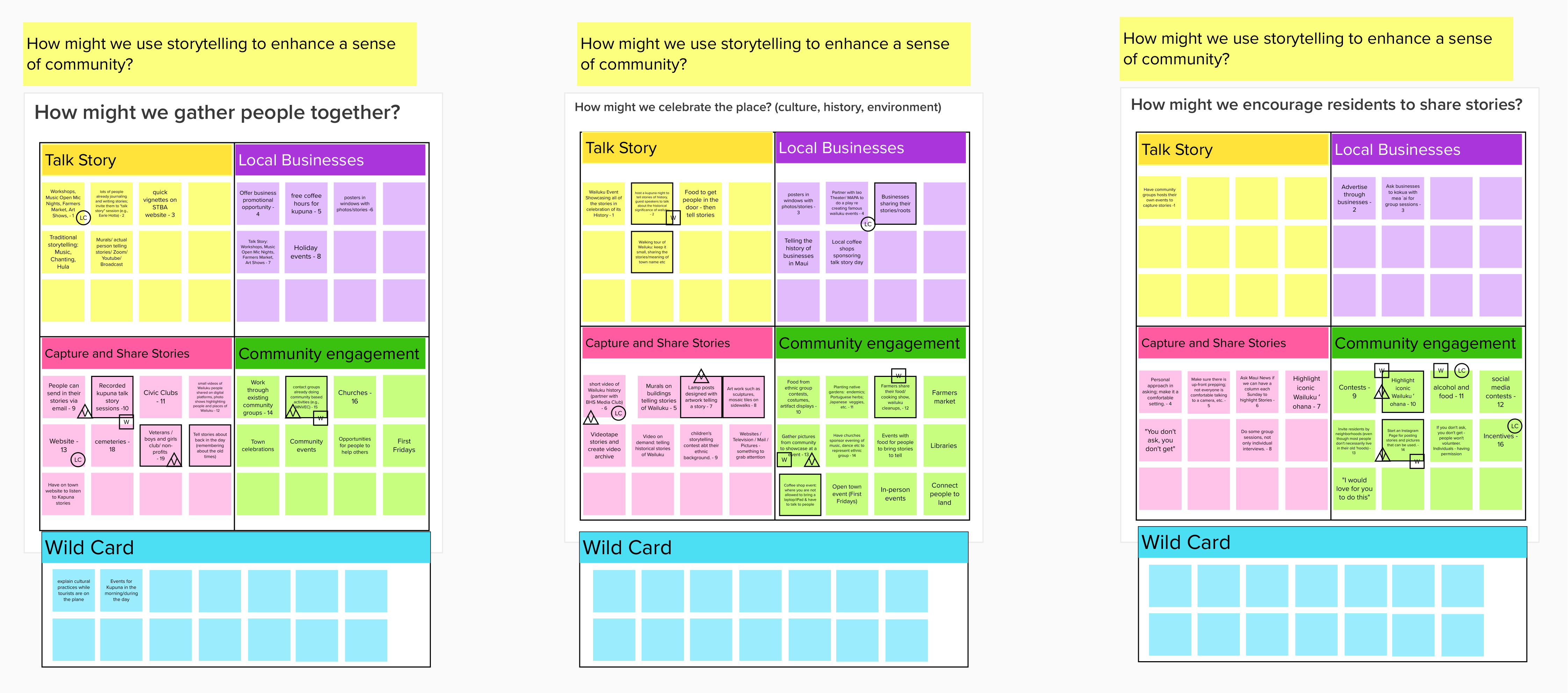
During the session, users participated in a creative matrix activity. They were given prompts related to the “how might we” questions and the project must-haves. The participants generated ideas and voted on their top two or three concepts.
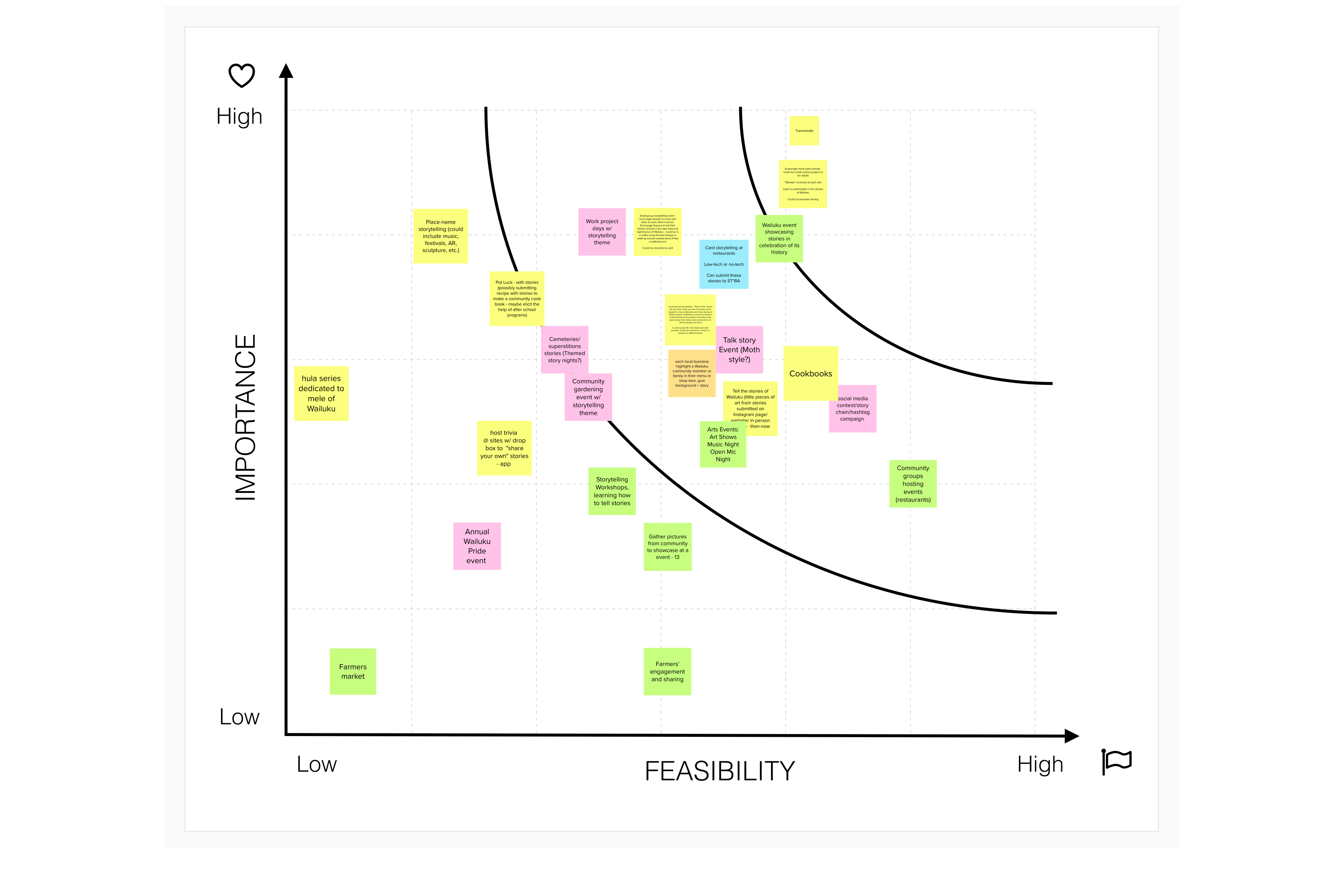
IDEA PRIORITIZATION MAP:
The team developed several ideas from the co-creation sessions and prioritized them using an idea prioritization map to assess the feasibility and importance of the ideas.
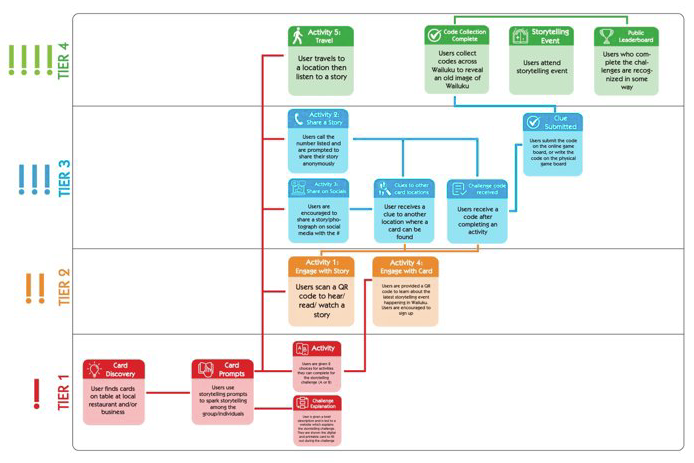
The session ended with a solution that brought together multiple ideas from the sessions to develop an interactive scavenger hunt-type adventure idea.
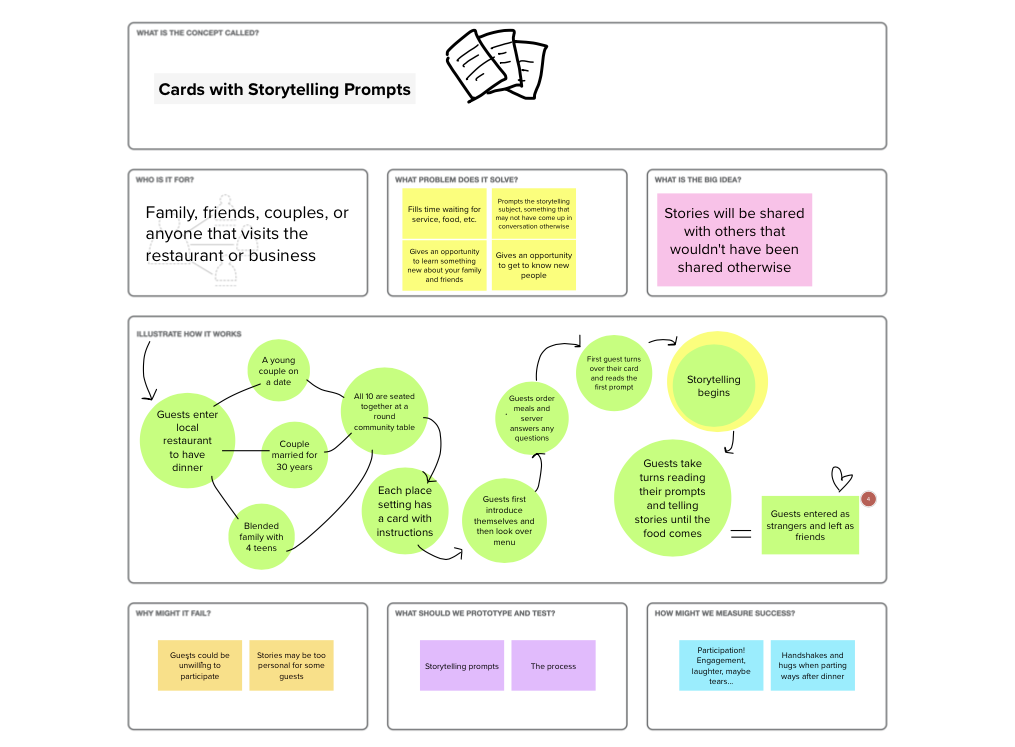
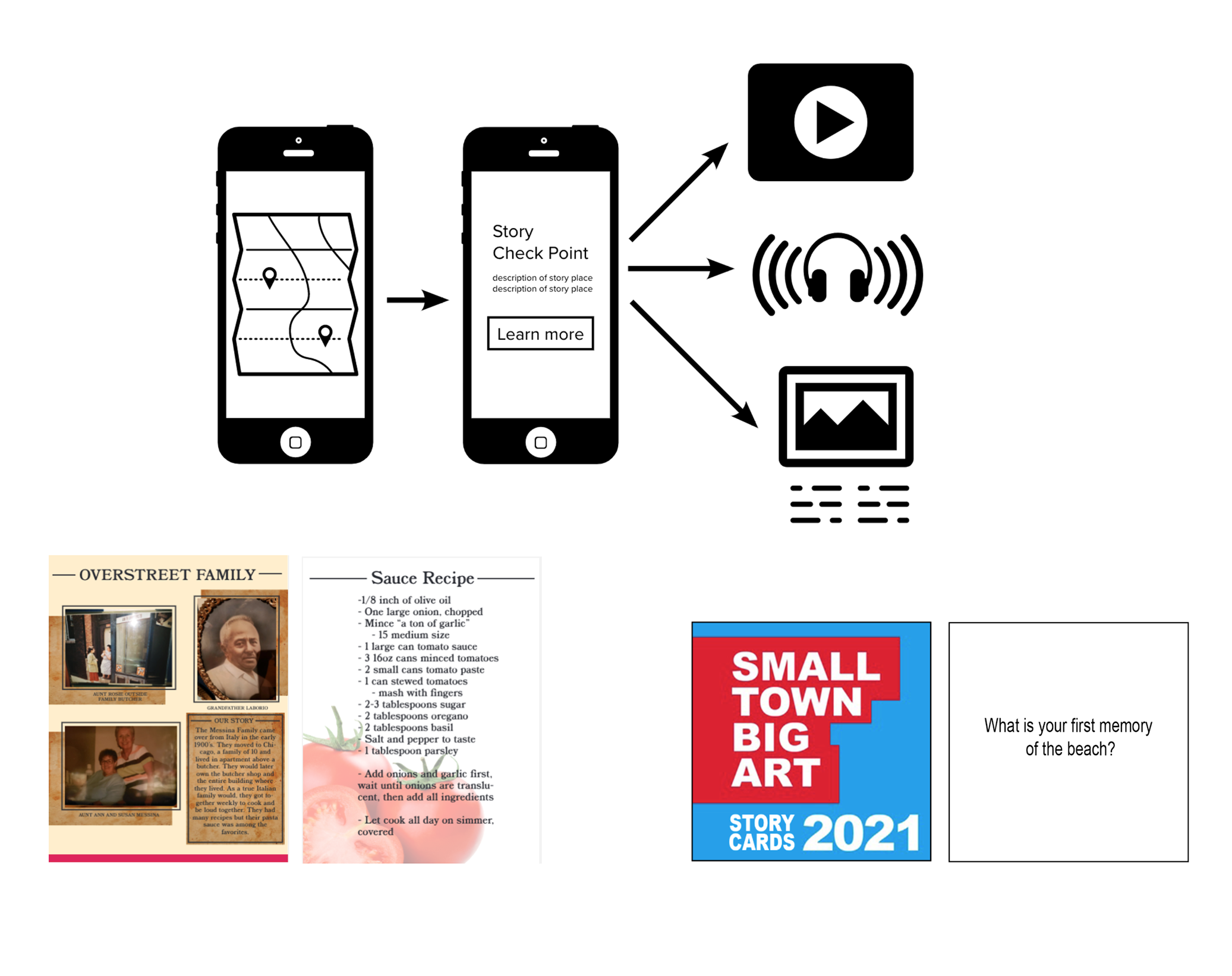
Concept posters, sketches and journey maps were created to collaboratively work through the iterations of ideas.
LOW-FIDELITY PROTOTYPES:
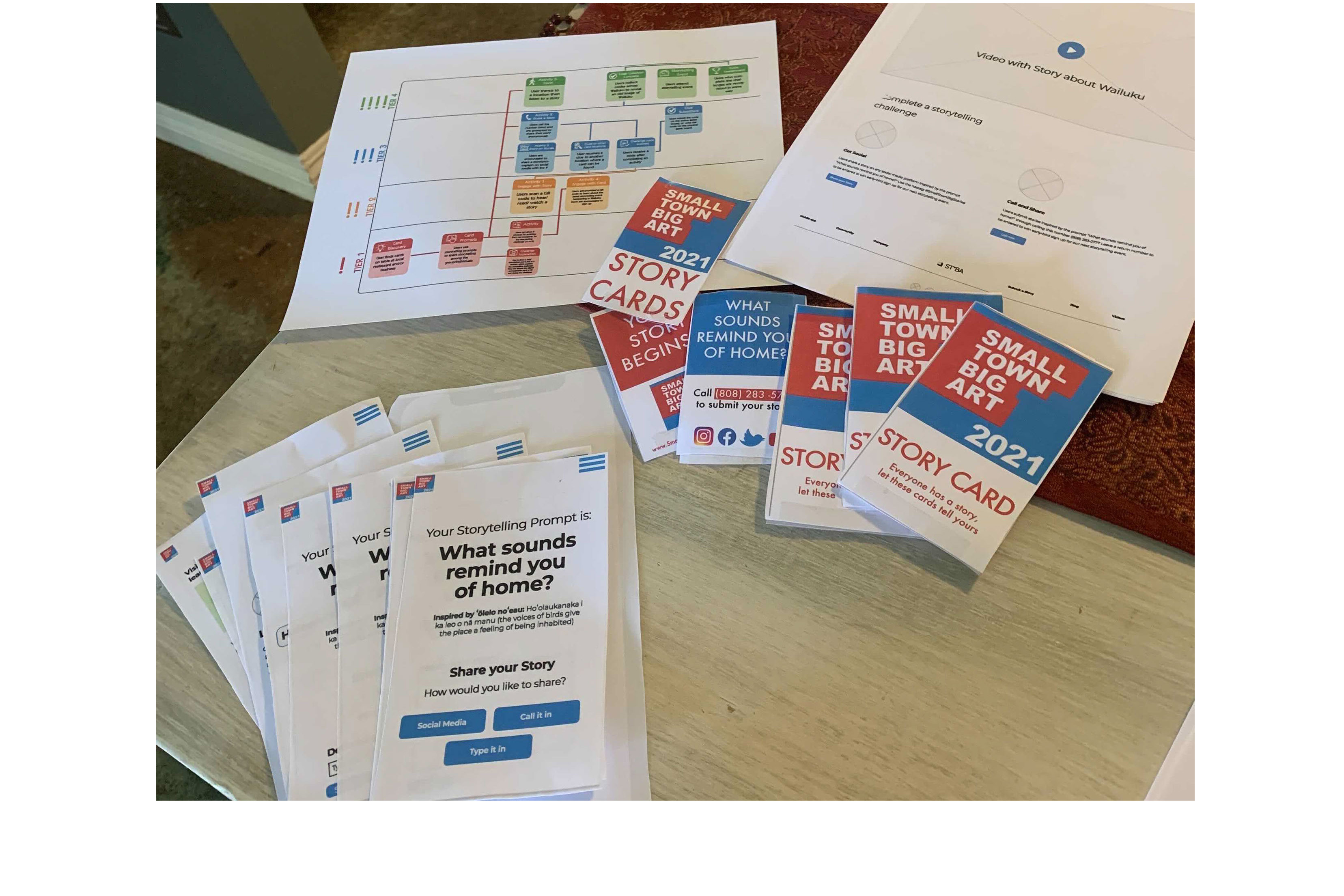
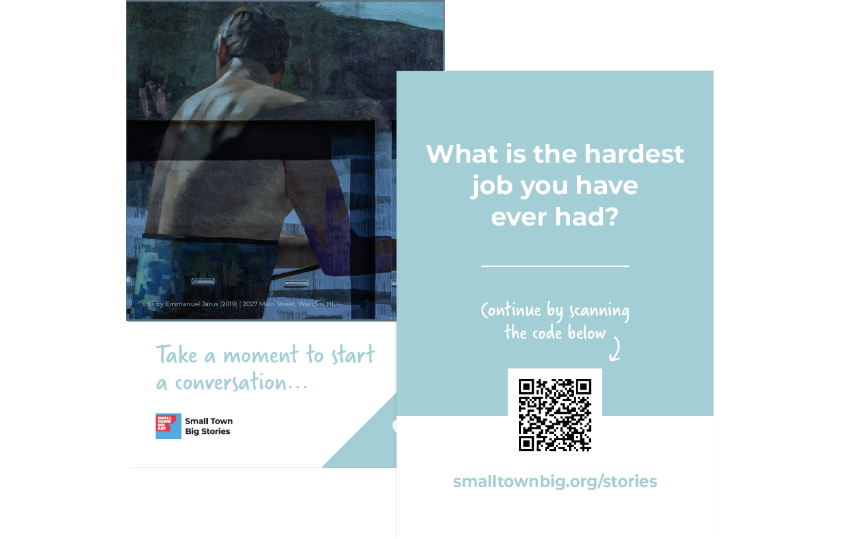
The team created a low-fidelity prototype of an interactive scavenger hunt design that encouraged participants to complete a challenge by collecting and interacting with storytelling cards around the community. The QR code on each card led to a digital platform with activities that focused on capturing and sharing stories.
Four Maui residents tested our low-fidelity prototypes, two in person and two over Zoom. Each participant was shown wireframes and was given a walk-through explanation of the design. Follow-up questions were asked about their thoughts on the concept.
There were many key findings from the low-fidelity prototype testing; however, the main insights revealed the focus of the project needed to shift from story collecting to story generating. Users liked how it was a modern way to practice old traditions and they wanted to share stories; however, they were reluctant to submit their stories through the digital platform.
MID-FIDELITY PROTOTYPES:
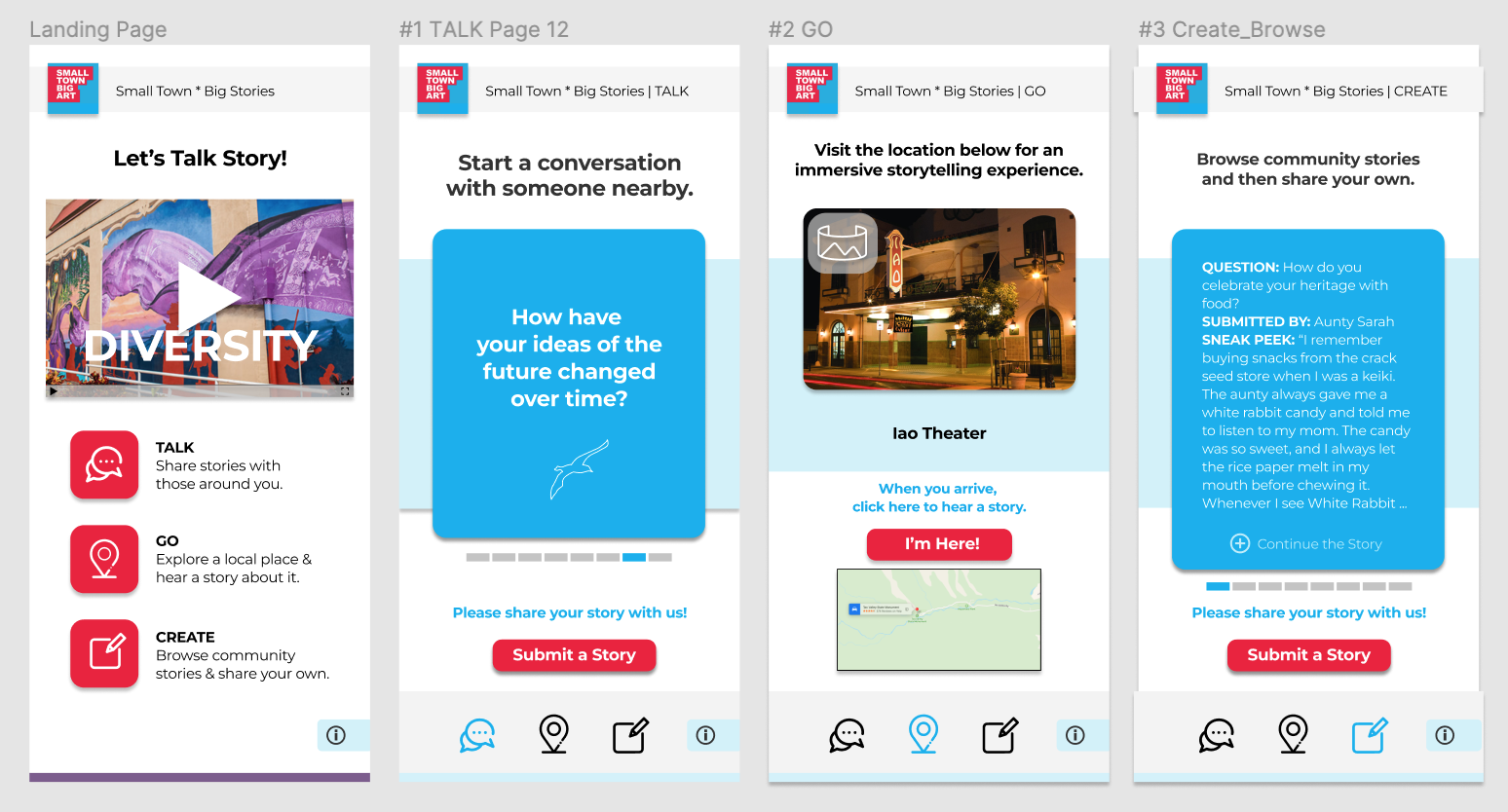
Based on this feedback, the team shifted focus and began to tweak the structure of the scavenger hunt. After a few brainstorming sessions, the team created a mid-fidelity prototype. Each card’s main focus was to spark stories within groups of people; however, there were still options to submit stories to share with the community. There were three types of cards with different digital experiences accessible through the QR codes. "Talk" cards provided conversation starter prompts to generate stories. "Go" cards encouraged users to travel to local destinations to hear stories about those places from community members. Lastly, the "Create" card allowed users to view community stories and share their own stories on the platform.
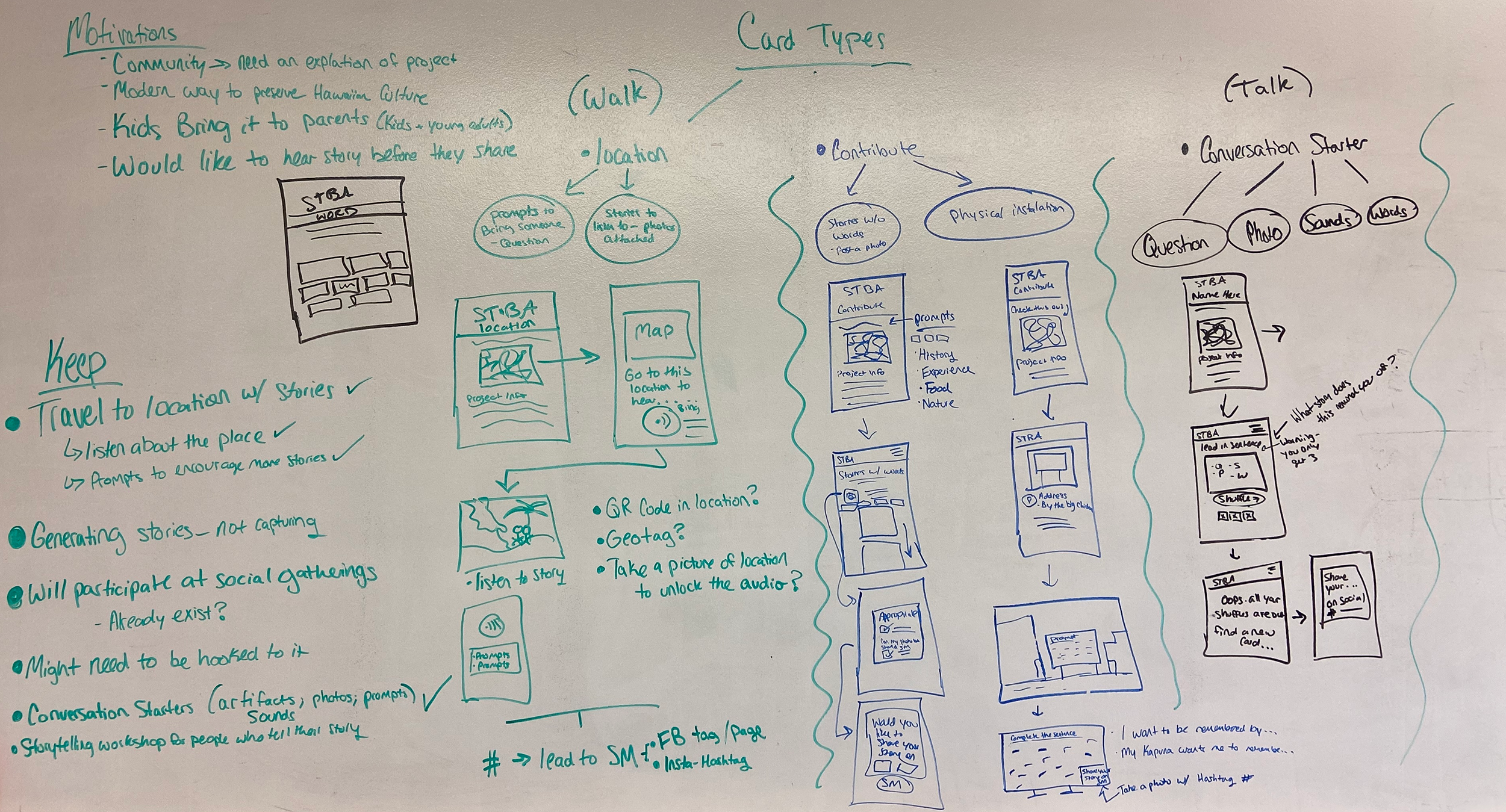
Mid-fidelity brainstorming
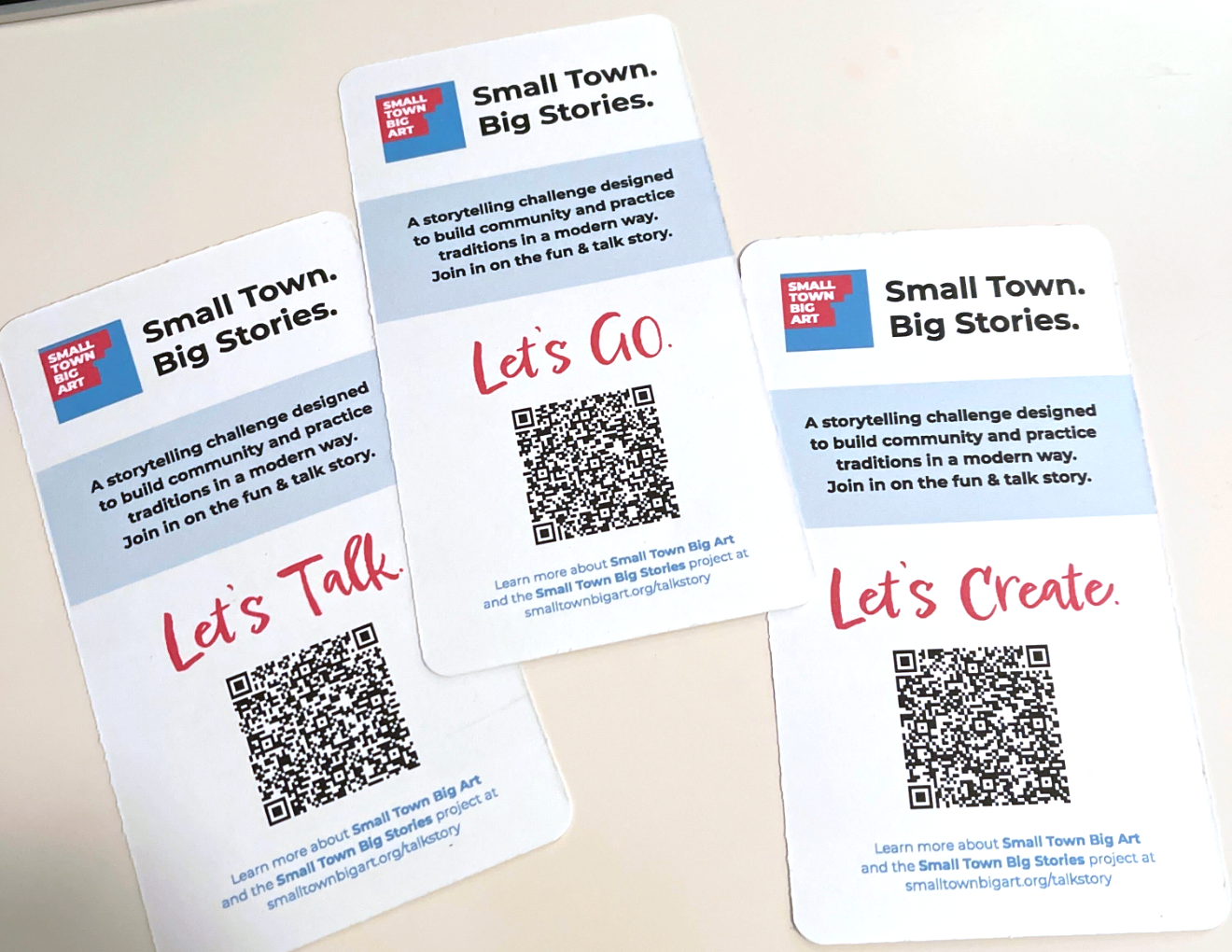
Story card front
MID-FIDELITY PROTOTYPES - ITERATION 2:
After a few testing sessions, we realized users were confused on the experience. There were two factors that determined whether or not users participated in the activities: group size and location. Users were more likely to participate when their environment fit with the activity. The team pivoted, creating a new prototype that allowed users to decide how they wanted to participate in the experience. They had access to all three activities with each card.
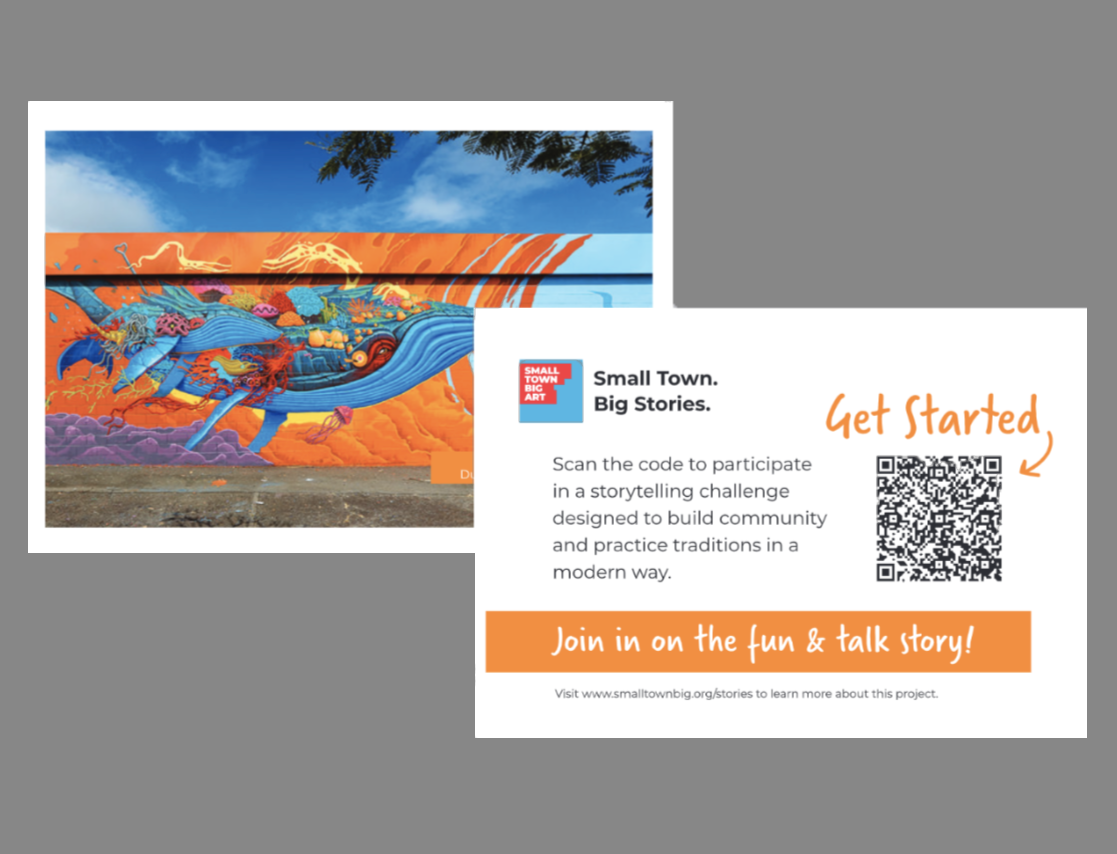
Story card front
Story card front
USABILITY TESTING:
Fifteen Maui residents participated in user testing of the mid-fidelity prototypes. This revealed a few areas that were in need of improvement, including the card design and the storytelling prompts.
CONTENT SURVEY:
A survey was conducted with 21 Maui residents to understand what story prompts sparked memories and stories.
The experience was updated and the digital platform was developed based on feedback from community members who participated in mid-fidelity usability testing.
HIGH-FIDELITY PROTOTYPE TESTING:
High-Fidelity prototype testing involved positioning cards at two businesses in Wailuku, Hawaii. Users independently interacted with the cards while team members observed from a distance. Users were then approached and given the opportunity to provide feedback on their experience. Results from this phase of testing were used to further enhance the cards and digital experience before their release.
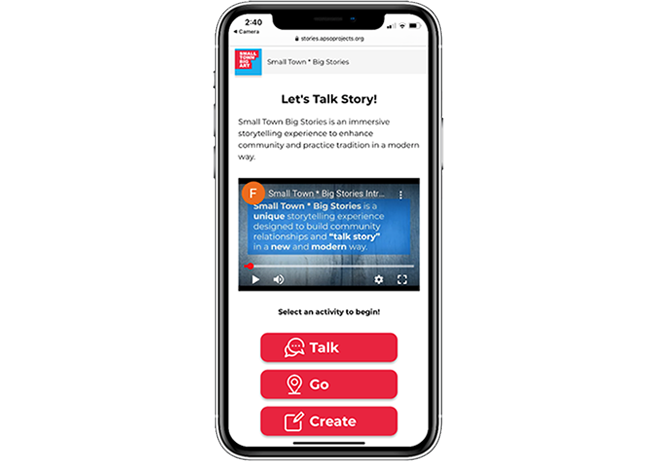
Small Town Big Stories is an interactive storytelling experience that encourages community members to practice tradition in a modern way through physical and digital cards that encourage the generation and consumption of local stories. Physical cards lead to a digital experience with activities that encourage users to tell stories, listen to stories and travel throughout the local area.
STORYTELLING CARDS:
The cards serve as the entry point for the experience, depicting local Small Town Big Art murals to draw attention to the project. The cards were distributed at locations in Wailuku, Maui to encourage participation and enhance a sense of community through storytelling. There are seven sets of cards representing seven community values: diversity, legacy, tradition, protection, hope, kuleana (responsibility), and belonging.
WEBSITE STORYTELLING EXPERIENCE:
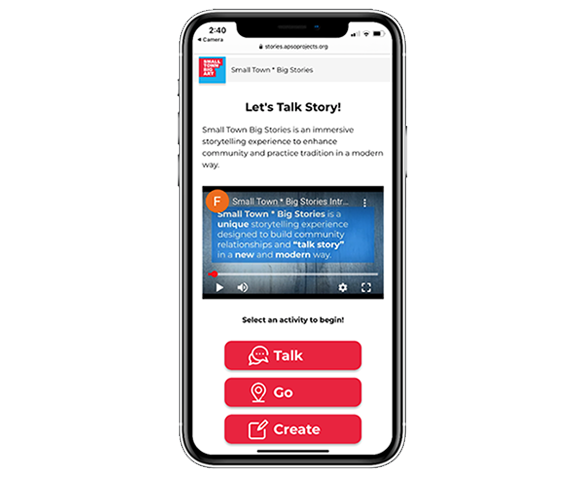
QR codes on the cards take users to the digital storytelling tool. Users are prompted with three options: “talk,” “go,” or “create.”
The “talk” section gives users story prompts to encourage conversation, the “go” section provides the opportunity to travel to a destination to hear a story, and the “create” section allows people to browse community stories and submit their own stories.
interviews
usability tests
cards distributed